
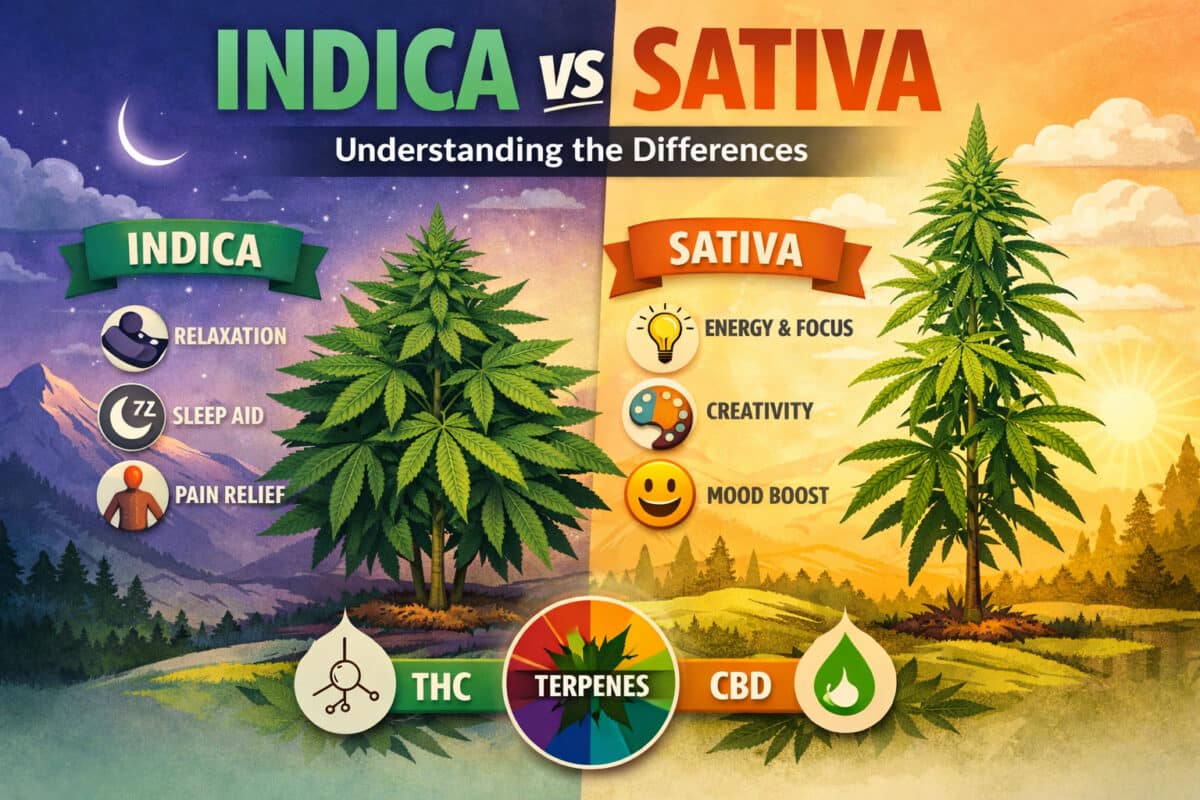
Cannabis has been used for thousands of years for medicinal, spiritual, and recreational purposes. Today, as legalization expands and consumer interest grows, one of the most common questions remains: What is the difference between Indica and Sativa cannabis?
According to a medically reviewed overview from WebMD, the differences between Indica and Sativa are often simplified, and individual effects can vary significantly based on chemical composition and dosage.
These two categories have long been used to describe how cannabis plants grow, how they look, and most importantly, how they make people feel. While modern cannabis science has revealed that the distinction is more nuanced than once believed, Indica and Sativa still serve as useful frameworks for understanding cannabis effects, strain selection, and consumer expectations.
This in-depth guide explores the history, biology, effects, medical uses, chemical profiles, and misconceptions surrounding Indica and Sativa cannabis – helping you make informed decisions whether you’re a patient, consumer, or industry professional.
Understanding Cannabis Classification
Historically, cannabis has been divided into three main categories:
- Indica
- Sativa
- Hybrid (a cross between the two)
This classification originally focused on physical plant traits and geographic origins, but over time it evolved into a shorthand for expected effects.
Before diving into differences, it’s important to understand that most cannabis available today is hybridized, meaning pure Indica or Sativa strains are increasingly rare.
Physical Differences Between Indica and Sativa Plants
Indica Plant Characteristics
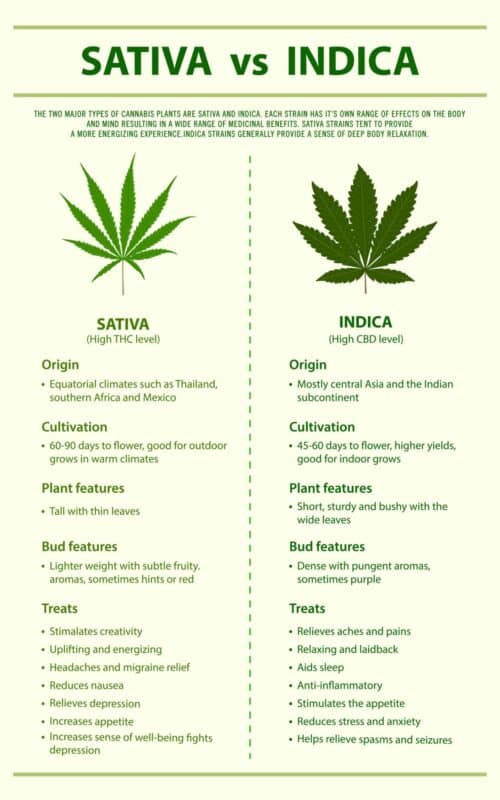
Indica plants originated in harsh, mountainous regions such as the Hindu Kush. These environments shaped their structure:
- Short and compact
- Broad, dark green leaves
- Dense buds
- Faster flowering cycles (7–9 weeks)
- Typically higher resin production
Their stocky build makes them well-suited for indoor cultivation and colder climates.
Sativa Plant Characteristics
Sativa plants evolved in warmer, equatorial regions like Southeast Asia and Central America. They adapted by growing taller and leaner:
- Tall, lanky structure
- Narrow, light green leaves
- Looser buds
- Longer flowering cycles (10–14 weeks)
- Higher yield potential outdoors
These physical traits originally helped farmers identify plant types long before lab testing existed.
✅ What Is the Difference Between Indica and Sativa?
The main difference between Indica and Sativa cannabis lies in their effects, plant structure, and traditional use.
Indica strains are typically associated with full-body relaxation and sedation, while Sativa strains are known for uplifting, energizing, and mentally stimulating effects. However, modern cannabis effects depend more on cannabinoid and terpene profiles than plant type alone.
✅ Is Indica vs Sativa Better for Sleep?
Indica strains are generally better for sleep because they tend to produce relaxing, sedative effects that help calm the body and mind. Strains high in the terpene myrcene are especially associated with improved sleep quality. However, dosage and individual tolerance play a major role.
✅ Is Sativa More Energizing Than Indica?
Sativa strains are usually more energizing than Indica, producing effects such as increased focus, creativity, and alertness. These effects are often linked to uplifting terpenes like limonene and pinene, though high THC levels may still cause anxiety in some users.
✅ What Are Hybrid Cannabis Strains?
Hybrid cannabis strains are created by crossing Indica and Sativa plants to combine physical relaxation with mental stimulation. Most cannabis strains available today are hybrids, allowing for more customized effects based on terpene and cannabinoid profiles.
Traditional Effects: How Indica and Sativa Feel

Indica Effects: Body-Focused Relaxation
Indica strains are traditionally associated with:
- Deep physical relaxation
- Muscle relief
- Sedation and sleepiness
- Reduced anxiety (in some users)
- “Couch-lock” sensations
Because of these effects, Indica is often recommended for evening or nighttime use, particularly for people seeking rest or pain relief.
Sativa Effects: Mental Stimulation
Sativa strains are commonly described as:
- Energizing and uplifting
- Mentally stimulating
- Creativity-enhancing
- Mood-boosting
- Focus-promoting
These strains are typically favored for daytime use, social activities, or creative work.
Medical and Therapeutic Uses

Indica-Dominant Medical Applications
Patients often turn to Indica strains for:
- Chronic pain
- Insomnia
- Muscle spasms
- Arthritis
- Post-surgical recovery
- Appetite stimulation
The calming nature of Indica can help reduce physical discomfort and promote rest.
Sativa-Dominant Medical Applications
Sativa strains are frequently used for:
- Depression
- Fatigue
- ADHD
- PTSD (in some cases)
- Low motivation or mental fog
Because Sativas are stimulating, they may not be ideal for people prone to anxiety unless carefully dosed.
Cannabinoids: THC, CBD, and Beyond
One of the biggest misconceptions is that Indica and Sativa effects are determined solely by plant type. In reality, the chemical composition plays a much larger role.
THC (Tetrahydrocannabinol)
- Psychoactive compound responsible for the “high”
- Found in varying levels in both Indica and Sativa
- Can be uplifting or sedating depending on dosage and terpene interaction
CBD (Cannabidiol)
- Non-intoxicating
- Anti-inflammatory and calming
- Often associated with body relaxation, but found in both plant types
Historically, Indicas were believed to have higher CBD and Sativas higher THC, but modern breeding has blurred this distinction.
Terpenes: The Real Drivers of Effects

Terpenes are aromatic compounds found in cannabis (and many other plants) that influence both flavor and effects.
Key terpenes include:
- Myrcene – Sedating, relaxing (commonly found in Indica strains)
- Limonene – Uplifting, mood-enhancing
- Pinene – Alertness and memory retention
- Linalool – Calming, anti-anxiety
- Caryophyllene – Anti-inflammatory and stress-relieving
Today, many experts agree that terpene profiles are more accurate predictors of effects than Indica or Sativa labels alone.
Hybrids: Where Most Cannabis Lives Today
Because of decades of crossbreeding, most strains are now classified as:
- Indica-dominant hybrids
- Sativa-dominant hybrids
- Balanced hybrids
Hybrids allow growers and consumers to fine-tune effects, combining physical relaxation with mental clarity or energy with pain relief.
This is why two strains labeled “Indica” can feel completely different depending on their genetics and terpene makeup.
Common Myths About Indica and Sativa
Myth 1: Indica Always Makes You Sleepy
Reality: Some Indicas can be mentally stimulating, especially at low doses.
Myth 2: Sativa Causes Anxiety
Reality: Anxiety is more closely tied to THC levels and terpenes than plant type.
Myth 3: Plant Shape Determines Effects
Reality: Appearance helps growers, not consumers—chemical composition matters far more.
Choosing Between Indica and Sativa
When selecting cannabis, consider the following instead of relying solely on labels:
- Desired outcome (relaxation, focus, pain relief, creativity)
- Terpene profile
- THC and CBD percentages
- Time of day
- Personal tolerance and sensitivity
Indica and Sativa are best viewed as starting points, not definitive guides.
Best Indica Strains
Indica cannabis strains are best known for their deeply relaxing, body-focused effects. Traditionally associated with evening or nighttime use, Indica strains are often chosen by consumers seeking calm, physical relief, and rest after a long day.
This collection highlights some of the best Indica strains, selected for their consistency, terpene profiles, and reputation for delivering soothing, full-body experiences.
Best Sativa Strains
Sativa cannabis strains are commonly associated with uplifting, energizing, and mentally stimulating effects. Often preferred for daytime use, Sativa strains are popular among consumers seeking creativity, focus, and an elevated mood.
Our collection features some of the best Sativa strains, selected for their bright terpene profiles, reputation for clarity, and consistently invigorating experiences.
The Future of Cannabis Classification
As cannabis research evolves, many experts predict a shift away from Indica/Sativa labeling toward chemovar-based classification, focusing on:
- Cannabinoid ratios
- Terpene dominance
- Individual response patterns
Until then, Indica and Sativa remain helpful – if imperfect – tools for navigating cannabis options.
Conclusion
The difference between Indica and Sativa cannabis goes far beyond simple “relaxing vs. energizing” stereotypes. While their origins, physical traits, and traditional effects differ, modern cannabis science shows that terpenes and cannabinoids are the true drivers of experience.
Understanding these distinctions empowers consumers to make smarter, more personalized choices – whether for medical relief, creative inspiration, or relaxation at the end of the day.
As the industry matures, education will continue to replace myths, and cannabis classification will become more precise, nuanced, and user-focused.


