
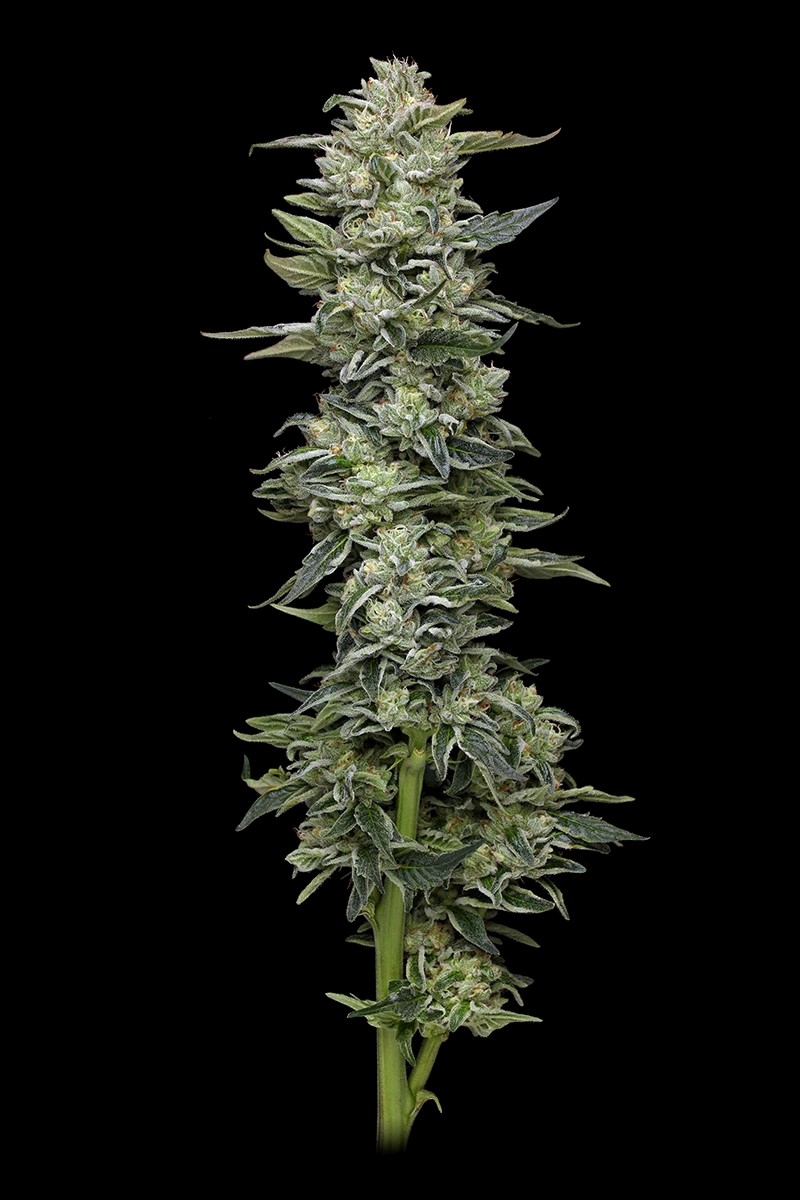
Honey Bear Cannabis Seeds by Humboldt Seed Company
Honey Bear cannabis seeds by Humboldt Seed Company are part of the breeder’s newer generation of resin-focused feminized genetics, but there is quite a bit more to this strain than frost alone.
Honey Bear combines tropical papaya and banana with warm honey, then throws a little old-school UK Cheese-style funk into the background. It sounds like an odd combination when you first read it, but that contrast is exactly what caught our attention at SeedMasters.com.
Then there is the flower quality. Humboldt Seed Company selected Honey Bear during its search for exceptional resin-producing genetics, yet the flowers still develop with plenty of substance. Large individual bracts, long frosty formations and very little surrounding leaf give the strain a particularly clean appearance.
It also comes with a genuine bit of Humboldt history. Honey Bear was named in honour of Den Bear, also known as Dennis, who worked with Humboldt Seed Company for five years and was part of the region’s original back-to-the-land community.
So while the name might initially sound like another sweet modern hybrid, Honey Bear actually brings together tropical fruit, unusual resin characteristics and a story that is closely connected to Humboldt itself.
Honey Bear Genetics
Humboldt Seed Company currently gives the lineage as:
Honey Banana UKC S1 x Papaya Tallyman x Honey Bear
The final Honey Bear reference makes that published lineage slightly unusual, and we are not going to try to rewrite the breeder’s genetics into something that sounds neater. If Humboldt lists it that way, that is how we prefer to present it.
The finished variety is approximately 60% Sativa and 40% Indica.
What is particularly surprising is how quickly it is reported to finish. Humboldt lists a flowering period of around 45–50 days, which is notably short for a strain the breeder describes as Sativa dominant.
The outdoor harvest window is listed at approximately 15–30 September, depending on conditions and individual expression.
Those figures are breeder estimates rather than guarantees, but they help show what makes Honey Bear an unusual piece of Humboldt breeding.
Papaya, Banana, Honey… and a Little Funk
The flavour is probably what will get most people interested initially.
Papaya is the strongest fruit note, bringing a ripe tropical sweetness rather than the sharper berry or citrus flavours found in many modern hybrids. Banana adds a softer and creamier layer underneath, followed by warm honey and honeycomb.
If that was the whole profile, Honey Bear could easily have become another straightforward sweet strain.
Thankfully, it isn’t.
Humboldt Seed Company also describes a touch of UK Cheese-style funk, particularly around the resin aroma. That little savoury, pungent edge gives the tropical fruit something to push against.
We would expect the main profile to sit somewhere around:
Ripe papaya
Sweet banana
Golden honey
Honeycomb
Tropical fruit
Light UK Cheese-style funk
For us, the Cheese note is one of the best details in the whole strain. Papaya, banana and honey are all naturally soft flavours, so having something slightly dirty and savoury underneath gives Honey Bear much more character.
It is sweet, but not in the usual candy-shop way.
The Resin Is a Big Part of the Story
Honey Bear came out of Humboldt Seed Company’s search for genetics with serious resin potential.
That is important because this does not appear to be a case of a breeder simply noticing that a finished strain happened to be frosty. Resin performance was part of the reason Honey Bear was selected in the first place.
Humboldt rates its resin production very highly and highlights an interesting combination of heavy frost and substantial flower formation.
The flowers are described as having:
Very heavy trichome coverage
Large individual bracts
Long, frosty flower formations
Very little surrounding leaf
Strong aromatic expression
An upright overall structure
We find the large bracts particularly interesting. Plenty of modern strains produce heavy frost, but Honey Bear appears to have a genuinely distinctive flower shape underneath it.
Humboldt also describes the finished resin as ranging from bright white through to warmer golden-honey tones. It is a small detail, but it fits the strain surprisingly well—the honey character seems to run through everything from the aroma to the appearance.
It Doesn’t Behave Like the Name Suggests
You could easily assume a strain called Honey Bear would be a heavy, sleepy Indica.
Humboldt actually describes it very differently.
Honey Bear is listed as 60% Sativa, with a strong and energising character. That brighter personality makes an interesting contrast with the soft honey-and-banana flavour.
We are also deliberately not adding a specific THC percentage here.
There are third-party listings that attach numbers to Honey Bear, but if we cannot trace a figure back to Humboldt Seed Company itself, we would rather leave it off the SeedMasters.com product page than turn an unverified number into a fact.
There is already enough going on with this strain without needing to chase an attention-grabbing THC claim.
Why Is It Called Honey Bear?
This is probably our favourite part of the strain.
Honey Bear was named after Den Bear, or Dennis, who spent five years working with Humboldt Seed Company at its anchor farm and was part of Humboldt County’s original back-to-the-land generation.
He was remembered by Humboldt Seed Company as someone who cared deeply about responsible breeding and about what the eventual recipient of the genetics would actually receive.
That might sound obvious, but it is a useful principle: if somebody buys seeds based on a breeder’s description, the genetics should do their best to live up to that description.
There are countless strain names created purely because they sound good on a packet. Honey Bear has a real person and a real piece of Humboldt history behind it, and we think that makes the name considerably more meaningful.
It also suits Humboldt Seed Company particularly well. The company has built much of its reputation around combining modern selection work with the breeding culture that developed in Northern California over several decades.
Honey Bear feels like a small connection between those two worlds.
Honey Bear at a Glance
Breeder: Humboldt Seed Company
Genetics: Honey Banana UKC S1 x Papaya Tallyman x Honey Bear
Seed Type: Feminized photoperiod
Sativa / Indica: Approximately 60% Sativa / 40% Indica
Flowering Period: Approximately 45–50 days according to Humboldt Seed Company
Outdoor Harvest: Approximately 15–30 September
Aroma: Papaya, banana, honey and tropical fruit
Flavour: Ripe papaya and honeycomb
Background Notes: Subtle UK Cheese-style funk
Flowers: Long, heavily frosted formations with very large bracts
Resin Production: Very high
Character: Strong and energising
Named After: Den Bear, also known as Dennis
Our Take on Honey Bear
At SeedMasters.com, Honey Bear is one of those strains that becomes more interesting once you get past the name.
Initially, we expected something fairly straightforward—probably sweet, perhaps banana-heavy and not much more.
That isn’t really what Humboldt has produced.
The papaya gives it a more tropical starting point, banana makes the flavour softer, and the honeycomb note adds warmth. Then that little bit of UK Cheese-style funk turns up underneath and changes the whole profile.
That’s the part we like.
We already carry plenty of sweet and fruity genetics at SeedMasters.com, so a strain needs something more than sugar to stand out. Honey Bear has that slightly strange combination of tropical sweetness and old-school pungency that makes you want to know more about it.
The resin side is equally convincing. Humboldt Seed Company clearly went looking for exceptional trichome characteristics, but Honey Bear does not appear to have sacrificed flower presentation to get there. Those huge bracts, long frosty flowers and minimal surrounding leaf give it plenty of collector appeal even before the resin is considered.
The 45–50-day flowering period also jumps off the specification sheet. For something listed as 60% Sativa, that is an unusually short breeder-reported figure.
But what really separates Honey Bear from a lot of modern releases is the story behind it.
Knowing the variety was named for Den Bear turns what could have been a slightly novelty-sounding strain name into something personal. It connects the genetics to an actual member of the Humboldt community and to the values that helped shape the breeder in the first place.
For us, that combination is what earns Honey Bear a place in the SeedMasters.com collection: interesting modern genetics, serious resin potential, a terpene profile that does something different and a genuine piece of Humboldt history behind the name.
Honey Bear cannabis seeds sold by SeedMasters.com are intended as collectible souvenirs and for genetic preservation purposes only. Please check and comply with all laws applicable in your country or region before purchasing.


