
Blue Dream gets most of the attention when people talk about blue cannabis strains, and there’s a good reason for that. Its combination of Blueberry and Haze genetics helped establish it as one of California’s most recognisable hybrids. We’ve covered its lasting appeal in our article, Why Blue Dream Genetics Remain So Popular.
But Blue Dream is sativa-dominant, and if you want to understand the indica side of the Blueberry family, there are plenty of other strains worth knowing about.
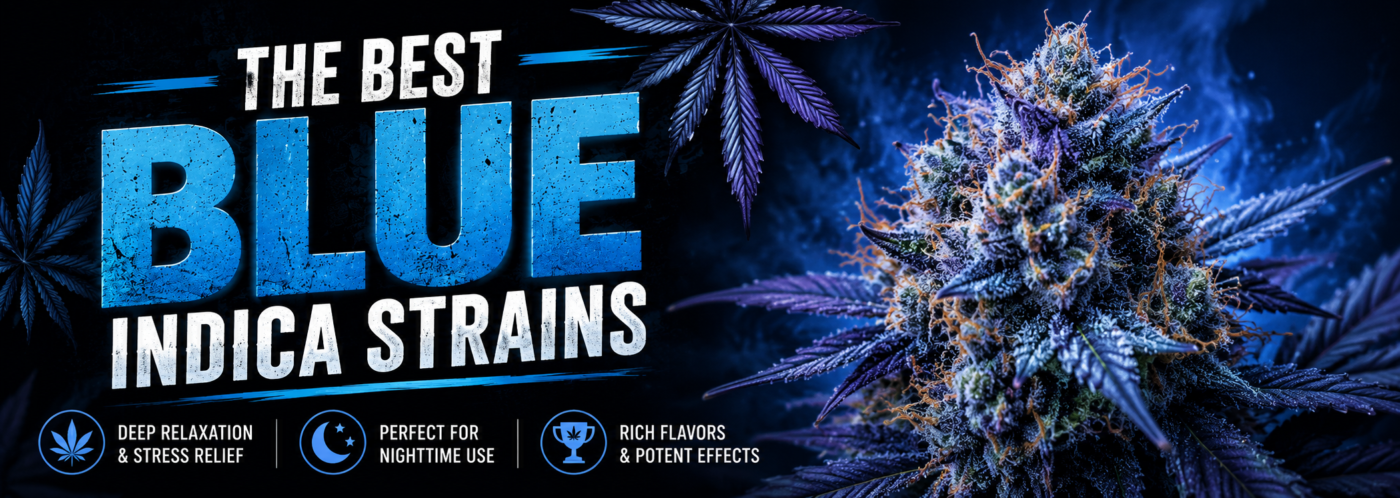
Blue indica strains sit at the heart of the whole blue family. They’re the ones carrying the strongest Blueberry character – the deep sweet berry aroma, the tendency to turn purple and blue in cool temperatures, and the smooth, full-body effect that’s made this genetic line one of the most collected in cannabis history. Here are the best of them, and what sets each one apart.
What Makes a Blue Strain Indica?
Most blue strains trace back to DJ Short’s original Blueberry, which is itself about 80% indica. That means the indica-dominant members of the family are the ones closest to the source genetics – they’ve had the least Haze, Sativa, or other genetics bred in to change the character. The result is a more concentrated expression of everything the blue family is known for: the sweet smell, the deep colour, and the relaxing, evening-friendly effect.
Blue sativa crosses like Blue Dream and Blue Haze are excellent strains in their own right – but they trade some of that Blueberry intensity for energy and growth speed. If pure blueberry flavour and strong body effect are what you’re after, the blue indica side of the collection is where to start.
The Best Blue Indica Strains
Blue Cheese
The most popular blue indica in the UK by a distance. Blue Cheese crosses Blueberry with the Original UK Cheese – a Skunk #1 phenotype with a famously sharp, savoury aroma – to produce something that shouldn’t work on paper but absolutely does. You get the sweet berry from the Blueberry parent and the funky, dank edge from the Cheese, and somehow it comes together into one of the most distinctive-smelling strains you can grow.
It’s 80% indica. Compact indoors, flowering in 7-8 weeks, and very manageable for growers with limited space. Yields are generous for the size of the plant. It doesn’t turn dramatically blue the way some Blueberry-dominant strains do, but the flavour is unmistakably from the Blueberry line. Barney’s Farm is the best-known producer, but it’s widely bred and available from multiple seedbanks.
Best for: UK growers, small indoor setups, anyone who wants blueberry flavour with a savoury twist.
Blueberry (DJ Short)
The original. DJ Short’s Blueberry won the High Times Cannabis Cup in 2000 and has been the benchmark blue indica ever since. It’s about 80% indica – a cross of Afghani with Highland Thai and Purple Thai sativas – and it’s the strain that every other blue variety is ultimately trying to capture or build on.
Blueberry is slow. It flowers in 8-9 weeks and takes its time in veg. But patience gets you buds that shift through deep reds, blues, and purples as they ripen, with an aroma that’s genuinely like blueberry jam – sweet, rich, and unmistakable. The effect is deeply relaxing without being overwhelming. This is the strain to grow if you want to understand where the whole blue family comes from.
Best for: Experienced growers who want the authentic source genetics; anyone who values flavour and appearance over speed.
Blue Kush
Blue Kush crosses Blueberry with OG Kush (or a Kush variant, depending on the breeder) to produce a heavily indica plant with the sweet fruitiness of Blueberry alongside the earthy, fuel-tinged depth that Kush genetics bring. THC typically sits in the 20-22% range, the effect is strong and sedating, and the plants stay short and compact – ideal for indoor grows where height is a concern.
It tends to colour up well in cooler temperatures, and the aroma at harvest is one of the more complex in the blue family – sweet berry on top, earthier and spicier underneath. Available from several breeders in our collection in both feminised photoperiod and autoflowering versions.
Best for: Growers who want a potent evening indica with blueberry sweetness and kush depth.
Auto Blueberry
The autoflowering version of the Blueberry lineage. Auto Blueberry flowers automatically on its own schedule without needing a light change, typically completes in 9-10 weeks from seed, and keeps the core Blueberry character – the sweet berry smell and the relaxing, indica-dominant effect – without the photoperiod commitment.
It’s not quite as intense as a well-grown photoperiod Blueberry, but it’s a lot more forgiving. The colour comes through well given a slight temperature drop towards the end of flower, and it stays compact enough to tuck into a small tent or corner of a grow room. A genuinely good entry point for anyone new to the blue indica family.
Best for: Beginners, small spaces, anyone who wants multiple harvests per season outdoors.
Blue OG
Blue OG sits on the heavier, more potent end of the blue indica spectrum. It’s a Blueberry x OG Kush cross (similar to Blue Kush but with different selection from the parent pool), landing around 19-21% THC with a strong, long-lasting body effect and a flavour profile that blends sweet blueberry with the classic OG pine-and-fuel character. Indica-dominant, compact, and a strong yielder indoors.
The OG genetics push the effect towards the sedating end – this is a late-evening strain rather than something you’d reach for during the day. Colour expression is solid with cooler night temperatures. Worth considering if you like the idea of Blueberry genetics but want something with a bit more punch than a straight Blueberry line.
Best for: Experienced growers after a potent, flavourful evening indica.
Which Blue Indica Is Right for You?
If you’re growing in the UK and space is tight, Blue Cheese is the obvious starting point – fast, reliable, and genuinely unique in flavour. If you want the authentic Blueberry experience without compromise, DJ Short’s Blueberry is the one, just be prepared to slow down and let it do its thing. For beginners or anyone wanting a quick turnaround, Auto Blueberry gives you the blue indica character without the photoperiod complexity.
Blue Kush and Blue OG are worth exploring once you’ve grown the classics – both push the effect and potency up a level while keeping the blue family’s characteristic sweetness.
All of the strains mentioned here are available, along with many more blue indica varieties, in SeedMasters.com’s blue strains collection.
Frequently Asked Questions
Are all blue strains indica?
No – the blue family spans indica, sativa, and hybrid genetics. Classic blue indica strains like Blueberry, Blue Cheese, and Blue Kush sit at the indica-dominant end. Blue Dream and Blue Haze are sativa-dominant. Most modern blue hybrids fall somewhere in between. The indica-dominant varieties tend to have the strongest Blueberry character in both flavour and colour, since they’re closest to DJ Short’s original genetics.
What is the strongest blue indica strain?
Blue Gelato 41 from Barney’s Farm is among the most potent blue indica-leaning strains available, with THC regularly hitting 26%+. Blue Kush and Blue OG both sit in the 20-22% range. For a milder but more flavour-focused option, original Blueberry strains typically land at 15-20% THC – lower than some modern genetics but with exceptional terpene expression that often makes them more satisfying to grow.
Are blue indica strains hard to grow?
Generally not. Blue Cheese and Auto Blueberry are among the more beginner-friendly strains in the blue family – both are forgiving, flower quickly, and don’t require much intervention. The original DJ Short Blueberry takes more patience (it’s slow to flower and has a longer veg period) but isn’t technically demanding. Blue Kush and Blue OG are straightforward for intermediate growers. The main thing with blue indicas is avoiding overwatering – like most indicas, they prefer to dry out a little between feeds.
Do blue indica strains turn blue indoors?
They can, but it depends on genetics and temperature. The colour comes from anthocyanin pigments, which are triggered by cooler temperatures – dropping below around 15°C (60°F) after lights-out during the last 2-3 weeks of flowering is the most reliable way to bring it out. DJ Short’s Blueberry and Auto Blueberry are among the most reliably colourful; Blue Cheese colours up less dramatically but still shows some purple. If colour expression is important to you, look for strains specifically noted for anthocyanin expression in the seedbank’s description.


